


About
I have sat where my clients sit
Twenty years in professional services. Solicitor, then Managing Director in restructuring. Now an executive coach to the people still in it.
Background
Nat Baldwin is an executive coach and leadership adviser to partners, senior professionals and firm leaders. He qualified as a solicitor at an international law firm, then built a career in restructuring, latterly as Managing Director of a specialist intellectual property valuation and disposition practice working on some of the most significant corporate failures in the UK. Today he works as an executive coach and consultant. He is a Certified Professional Coach, trained through the International Coach Academy, holds the ICF Associate Certified Coach (ACC) credential and is a TEDx speaker.
Why I do this work
I spent twenty years in high-stakes corporate environments. I qualified as a solicitor at an international firm, then moved into restructuring, where I spent most of my career. For much of that time I was Managing Director, leading intellectual property valuation and disposition work across the UK and Europe.
The mandates were about as high-consequence as commercial work gets: Thomas Cook, Monarch Airlines, TM Lewin, MFI, Land of Leather, British Ceramic Tile, Bank Fashion, Poundworld, and the sale of two football clubs, Bolton Wanderers and Blackpool. Household names, usually at the worst moment in their history, with lenders, administrators and thousands of livelihoods attached to the outcome. I was recognised in the TRI 250 Hall of Fame for that work.
I also spent years delivering training to firms and professional bodies across the restructuring and accountancy professions.
I was checking email at two in the morning, not because anyone asked me to, but because I did not know how to stop. I was performing at a high level and quietly coming apart. That is a pattern I now recognise in almost every senior professional I coach.
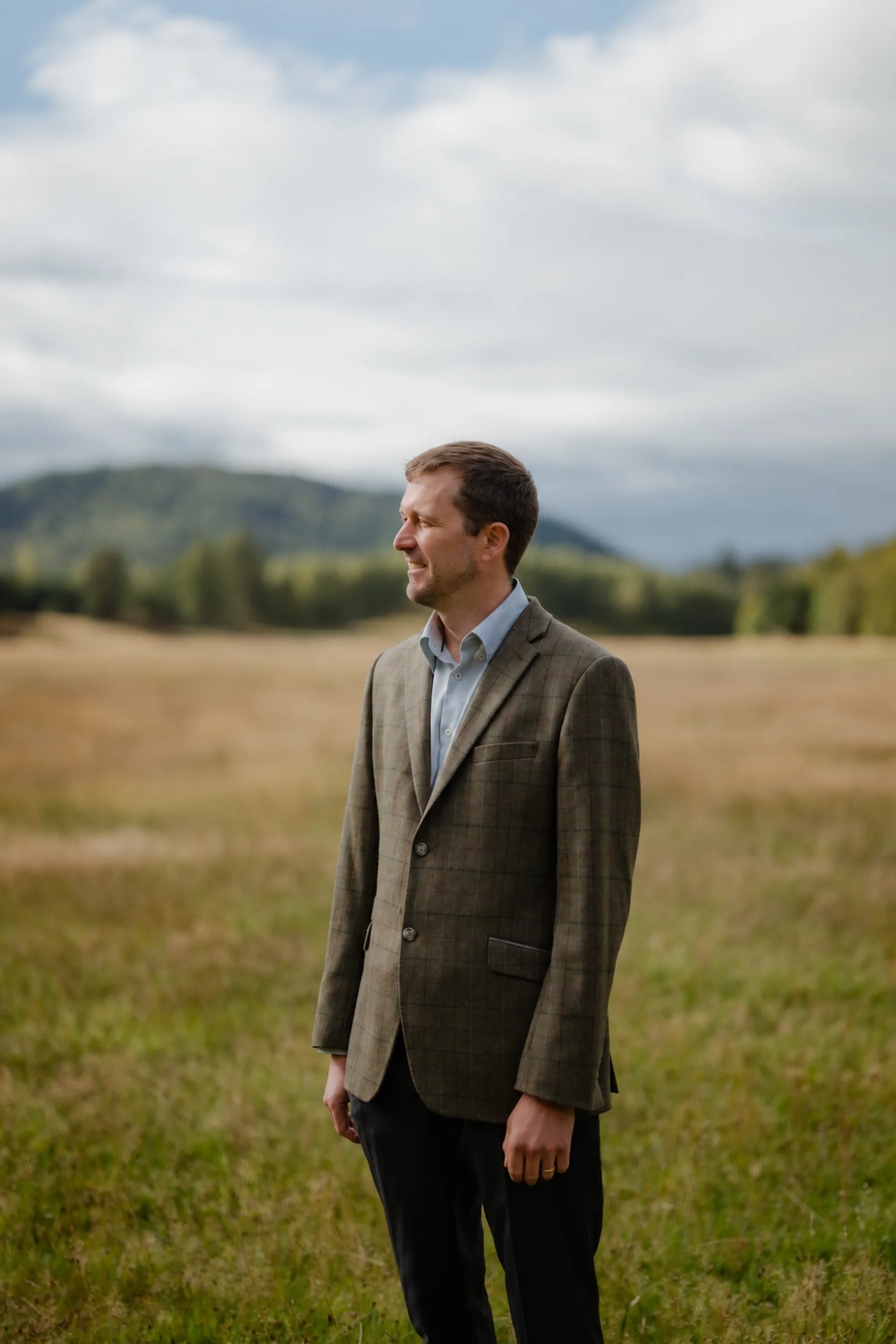
By every external measure, it worked. Inside, something was off.
The conveyor belt
For a long time I was on the conveyor belt.
I studied law because my father was a lawyer and I had no better idea what to do with myself. I never once asked myself what I actually wanted. No inner compass, just momentum. I crammed, passed, and walked into a traineeship on day one thinking: they are absolutely going to find out.
Nobody forces you onto the conveyor belt. You step on because it is moving and everyone else is moving with it. And you tell yourself this is fine, this makes sense, this is what people like me do.
Years later, at an industry awards dinner, with the career built, the awards won and every measurable standard met, I excused myself between the main course and the speeches, walked to the bathroom, and just sat. Not for any practical reason. Staring at the back of a door, while my brain quietly shut down. That is what high performance can look like from the inside.
So I did what any rational, self-aware professional does. I quit and bought a campervan. I trekked to Everest Base Camp and drove through Europe, and for about six weeks it was brilliant. Then the same flat emptiness came back, standing in the mountains of northern Spain, birds of prey circling above a lake so still it barely looked real, feeling absolutely nothing.
You cannot outrun a life you never consciously chose.
That is when it landed. I had been trying to solve an internal problem by changing my location. The turning point was not about rejecting ambition. It was about becoming deliberate: working out my values, my strengths, what genuinely energised me and what quietly drained me. Through coaching, therapy and a lot of uncomfortable honesty, it came down to five questions.
The signature framework
The Five Questions
These are the five questions I wish someone had put in front of me twenty years earlier. They are the spine of my TEDx talk and, in one form or another, of most of my coaching.
-
Most of us are performing a story we inherited from our parents, our schools or our profession. We did not write it. We absorbed it and started living it. Until you name it and look at it properly, you will keep performing it.
What script have you been performing, and did you ever actually choose it?
-
Autonomy. Creativity. Recognition. Impact. Security. Values simply means what matters to you: in your life, your work, and how you want to spend your days. Nothing more mystical than that. Until you work it out, you can work incredibly hard and still feel like you are climbing the wrong mountain.
Are you living by values you have consciously chosen, or ones you absorbed from the people and environments around you?
-
Not what you are capable of. Where you come alive. These are not the same thing. You can be highly capable at something that quietly drains you. Most high performers are, because they got good at it and it got results.
Where do you consistently feel most energised and most yourself, and have you allowed yourself to build around that?
-
What pace brings out your best? What culture, what kind of people? I spent years in an environment that rewarded constant availability and absorbed it so completely that I stopped asking whether it suited me. It took some fairly serious physical symptoms before I did. I now live in the woods in the Highlands, at a completely different pace, and I am more stable and more myself for it. I had mistaken surviving for thriving.
Are you genuinely thriving where you are, or are you just very good at surviving it?
-
Your defaults are the decisions you make without knowing you are making them. The hours you keep. Your definition of enough. What a good life is supposed to look like. They feel like choices because at some point you said yes, but often you did not so much choose them as accept them, and then gradually mistake them for your own.
What in your life is genuinely chosen, and what have you simply absorbed without noticing?
One of those probably landed harder than the others. That is usually where the work starts.
Book a conversation
Career at a glance
Twenty years in professional services
Law
Solicitor
LLB (Hons) and Diploma in Legal Practice, University of Edinburgh. Trained and qualified at an international law firm.
Restructuring
Managing Director
Intellectual property valuation and disposition on high-profile UK insolvencies, including Thomas Cook, Monarch Airlines, TM Lewin and the sale of Bolton Wanderers and Blackpool FC. TRI 250 Hall of Fame.
Today
Executive coach and consultant
One-to-one coaching, leadership development and speaking for professional services. On the coaching panel of a major international law firm.
Credentials
What the ICF credentials mean
Coaching is unregulated, so anyone can call themselves a coach. The International Coaching Federation (ICF) is the largest global professional body for coaches, and its credentials are the most widely recognised standard.
Associate Certified Coach (ACC)
- Completion of an ICF-accredited coach training programme
- At least 100 hours of client coaching, with eight or more clients
- Mentor coaching with an experienced credentialed coach
- An assessed recorded coaching session
- A pass in the independent ICF credentialing exam
- Renewal every three years, with continuing education
Verify my ACC credential on Credly
My training was the International Coach Academy's Certified Professional Coach (CPC) programme, accredited by the ICF at Level 2: 125 hours of coach education, including a performance assessment at professional coach level. I am also a member of the ICF.
The coaching skill set
ICF assesses coaches against its core competencies, grouped into four areas. In practice this is what you should expect from a credentialed coach.
- Integrity
- Strict confidentiality, clear ethical boundaries and the ICF Code of Ethics. Knowing when coaching is not the right support.
- Trust and agreement
- A clear contract about what we are working on, how we will work and what a good outcome looks like, including with a sponsoring firm.
- Listening
- Hearing what is said and what is not. Noticing the pattern behind the presenting issue.
- Growth through action
- Questions that create insight, then turning that insight into decisions and changes you actually make between sessions.
What I bring
- LLB (Hons), qualified solicitor, trained at an international law firm.
- Twenty years in professional services, latterly as Managing Director in restructuring, leading intellectual property valuation and disposition across the UK and Europe.
- Advisory work on major UK restructuring and insolvency mandates, including Thomas Cook, Monarch Airlines and the sale of two football clubs.
- TRI 250 Hall of Fame recognition.
- Extensive training delivery to law and accountancy firms and to professional bodies including R3 and the ICAEW.
- Certified Professional Coach (CPC), International Coach Academy, and ICF Associate Certified Coach (ACC). ICF member.
- TEDx speaker: Stop Drifting, Start Deciding.
How I work
I keep it straight. I will tell you what I think, ask the questions that matter, and help you see the thing you have been circling. No jargon, no manufactured optimism, no programme I am trying to fit you into.
There are frameworks and there is rigour behind the work, but they stay in the background. What clients tend to value is having someone who has held real responsibility, who is entirely outside their firm and its politics, and who will say the thing nobody internal will say.
You do not have to choose between professional excellence and being yourself. Most of the people I work with have simply never been given the space to work out what the second one means.